Agentic Engineering
Everything we have published on agentic engineering.
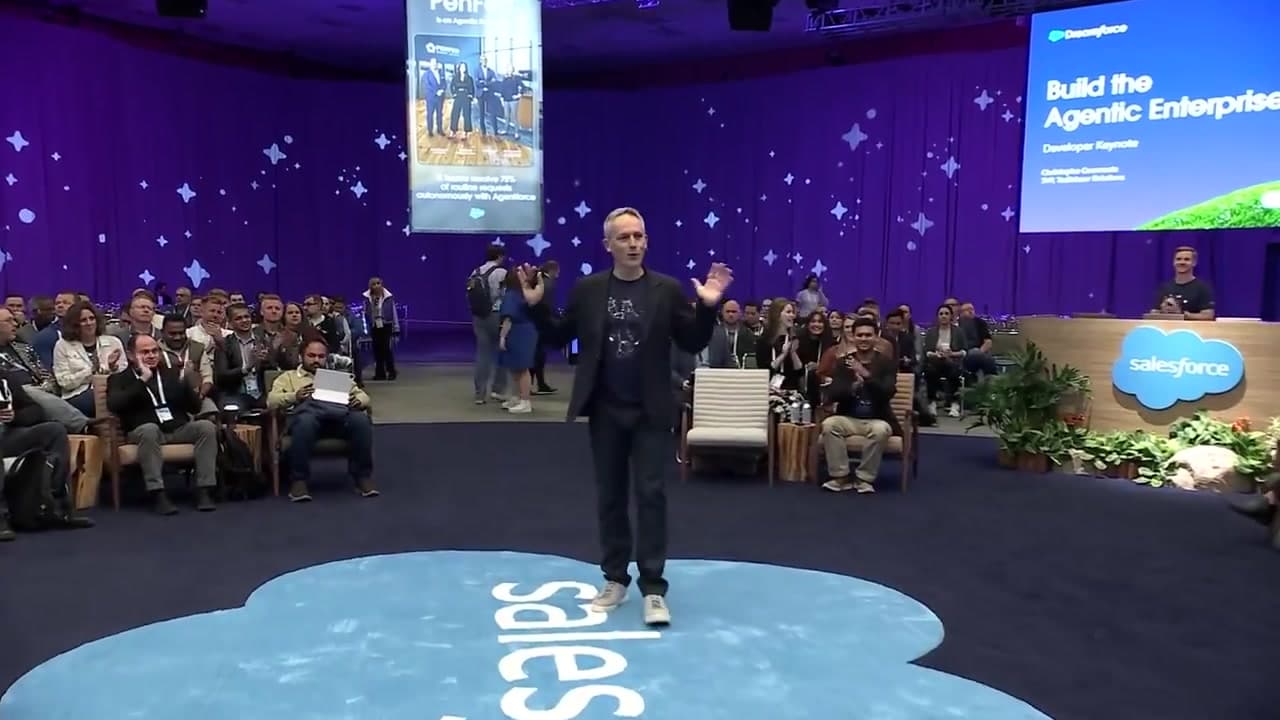
Dreamforce 2026 Dev Keynote: As a Future Salesforce Developer, I…
AI does not make Salesforce developers obsolete. It moves their work up a level: define outcomes, write specs, review with expertise and orchestrate teams of agents. After years of unclear messaging and tool chaos, Salesforce showed what the future might look like.
What Actually Is a Salesforce Forward Deployed Engineer?
The FDE job starts before anyone builds anything: deciding which agents are worth building, and deciding how you will measure success or failure once they run.
The Fable of the Hare and the Hedgehog
Our steps and learnings while building a semi-autonomous AI pipeline that takes a GitHub ticket and converts it into an implemented pull request.
Putting Learning in the Loop
Personalisation in software usually means removing friction. But friction, discoverability and serendipity make us better engineers. How I built AI skills that put learning back in the loop.
How AI Agents Speed Up Manual QA Testing on Salesforce Projects
See how AI agents like Claude Code speed up manual QA on Salesforce projects, from pulling JIRA tickets to writing bug reports and retest evidence.
How to Keep AI-Assisted Salesforce Development Cost-Effective
Two pricing announcements on the same effective date will reshape AI development costs. Architecture decisions made now define the AI expenses for the next two years.
From AI Pilot to Production Reality
Building an AI proof-of-concept is the easy part. Most initiatives stall when it's time to run those solutions on real data, under security, compliance, and operational constraints. The FDE model exists to close that gap.
Thinking About Replacing Salesforce With Your Own Vibe-Coded CRM? Read This First.
Fast to create. Harder to secure, scale, and maintain. Why "build your own CRM with AI" looks like a $300B savings on paper and a costly software business in practice.